
Search...


Destination
Destination
Travel Style
Travel Style
Duration
Duration
Budget
Budget











 All Our Tours
 Request A Quote
Written by: Alice Le
Updated date:29/12/2025
Hello, I’m Alice. I’m a passionate travel expert with years of experience exploring Vietnam, Laos, Cambodia, and Thailand. My journeys through these countries have given me a deep appreciation of their landscapes, traditions, and cultures, which I now share through authentic insights and tailored recommendations. With this expertise, I can design trips that perfectly match your expectations and create truly unforgettable journeys. I’m here to guide you toward unique experiences, crafted just for you.
Contents
Festivals in Cambodia are among the most vibrant and meaningful cultural experiences in Southeast Asia. Rooted in ancient Khmer traditions, Buddhist beliefs, and seasonal agriculture, these celebrations offer travelers a deeper understanding of Cambodia’s history, spirituality, and way of life. Whether you’re planning a cultural journey or simply curious about local customs, exploring Cambodian festivals is one of the best ways to experience the country beyond its famous temples.
Cambodian festivals reflect the country’s deep spiritual roots, agricultural traditions, and strong sense of community. Most festivals combine Buddhist rituals, ancient Khmer customs, music, dance, and food, creating experiences that are both meaningful and visually vibrant. Visitors visiting Cambodia on these occasions can expect colorful parades, temple ceremonies, traditional performances, and warm hospitality wherever festivals take place. These celebrations often mark important moments such as the Khmer New Year, rice harvest, religious observances, and historical events. For travelers, festivals offer a unique opportunity to connect with local life and understand Cambodia beyond its temples.
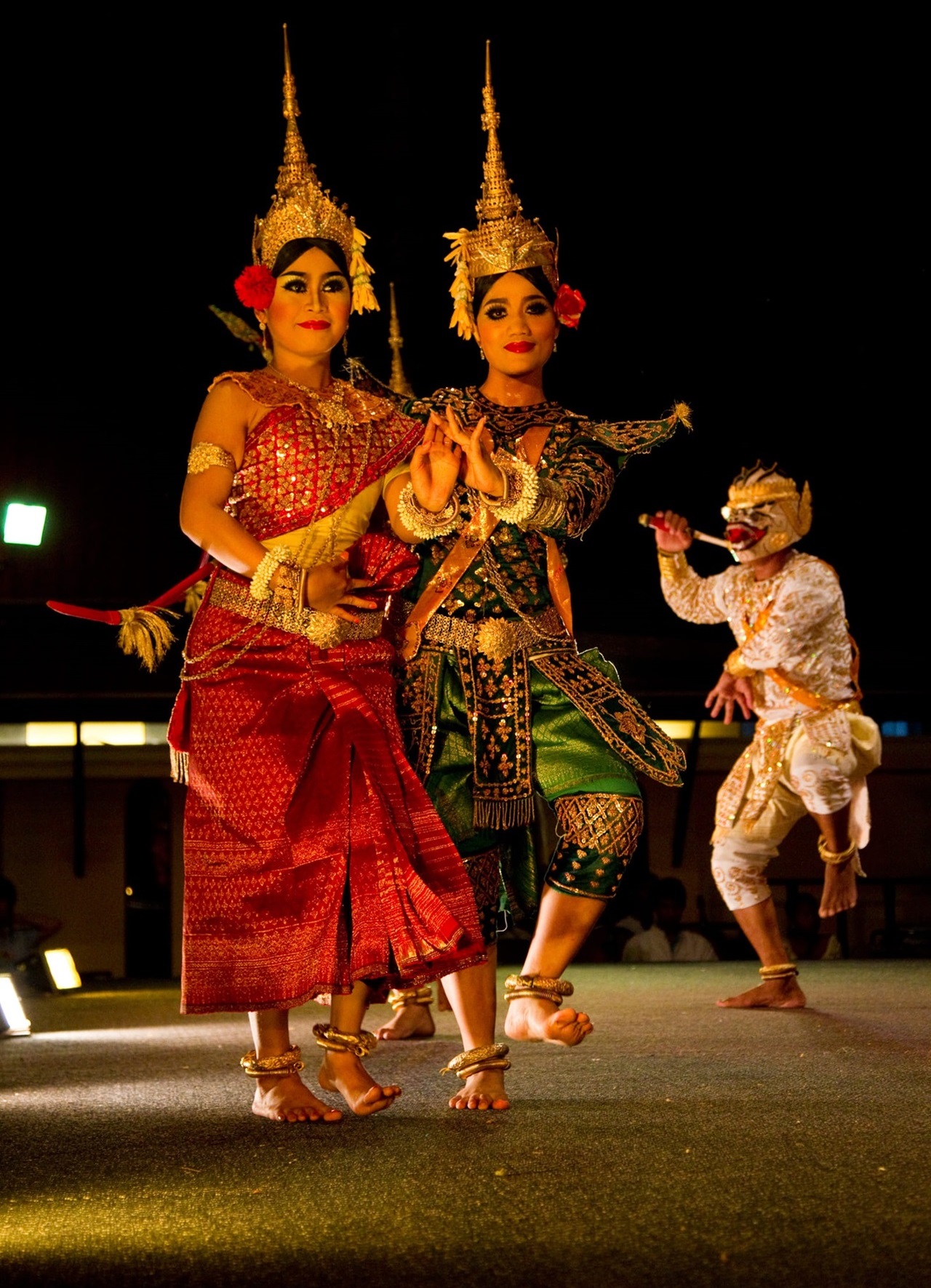
What to expect in Cambodian Festivals?
Khmer New Year is Cambodia’s most important national celebration. It is also known as Chaul Chnam Thmey, or Moha Sangkranta in Khmer, and is widely referred to as the Cambodian New Year. This major festival is a three-day public holiday celebrated across the country.
The phrase “Chaul Chnam Thmey” means “enter the new year” in English. Unlike the Western New Year, the Khmer New Year is based on the traditional solar calendar, which has been followed in Cambodia for centuries.
In 2026, the Cambodian New Year will be celebrated from 14 April to 16 April.
The Khmer New Year celebration focuses strongly on family unity, community bonding, and religious traditions. Across Cambodia, schools organize cultural activities and traditional games for students one to two weeks before the festival, followed by a three-day nationwide public holiday. During this time, Cambodian families return to their hometowns to celebrate together, visit temples, and take part in meaningful customs.
Each day of the three-day Khmer New Year festival has its own name, purpose, and traditional rituals.
Day 1: Moha Sangkran – Welcoming the New Year
Moha Sangkran marks the first day of the Khmer New Year and symbolizes the arrival of the New Angels, who are believed to protect the world for the coming year. According to tradition, the leader of these angels is Kimitea Tevi.
On this day, Cambodian families will clean and decorate their homes, prepare special foods, and arrange offerings. Family members visit Buddhist temples to offer fruits and meals to monks in exchange for blessings, good fortune, and protection for the new year.
Day 2: Veareak Vanabat – Honoring Ancestors and Giving Charity
The second day, known as Veareak Vanabat, is dedicated to honoring ancestors and showing gratitude to elders. Cambodian families visit monasteries to conduct ancestral ceremonies and remember deceased relatives.
People present gifts to parents and grandparents, while many families also donate food, money, and necessities to the poor and needy. In the evening, worshippers visit temples to build sand mounds, a symbolic ritual believed to bring prosperity, merit, and long life to individuals and the nation.
Day 3: Veareak Laeung Sak – Blessings and Forgiveness
Veareak Laeung Sak is the final and most spiritual day of the Khmer New Year. On this day, families perform the sacred ceremony known as “Puthu Srang Preah”. During the ritual, participants gently bathe Buddha statues with fragrant holy water and then pour the same water over the hands or shoulders of grandparents and elders. This meaningful act expresses gratitude, respect, and an apology for past mistakes, while also asking for blessings, wisdom, and good health in the year ahead.
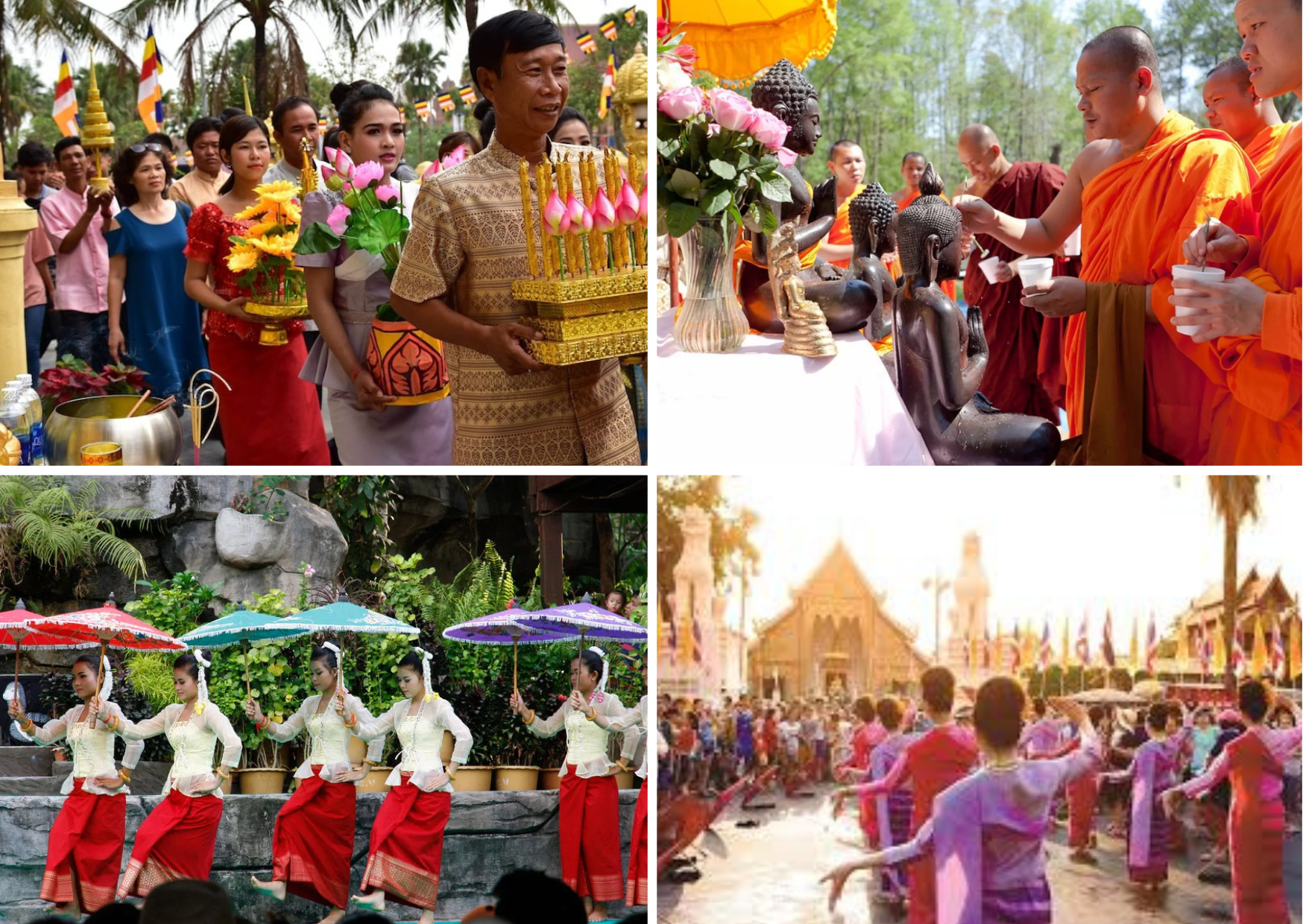
Khmer New Year (Chaul Chnam Thmey)
The Water Festival celebrates the reversal of the Tonle Sap River’s flow. It is also named Bon Om Touk, and has its roots dating back to the Khmer Dynasty in the 12th century. It happened under the reign of King Preah Bat Jayavarman VII and was organized to commemorate the Cham’s loss and local people believed to be the shelter of gods and nature, bringing favors to fishermen and farmers and thus giving back.
The Water Festival is held around November, sometimes it will be in late October. In 2026, it will be held from November 23 to November 25. If tourists want to participate in this festival, don’t forget to take note and prepare for the tour soon.
The festival happens in the capital city in Phnom Penh – the greatest event where you can watch the boat races on the bank of the Tonle Sap River. During the festival nights, tourists can see fantastic fireworks and immerse yourself in live Cambodian music concerts, bringing the whole mood to a pinnacle. Furthermore, you may also explore adjacent tourist attractions such as the National Museum and the Royal Palace. Besides Phnom Penh, tourists can visit Siem Reap – an ideal venue for the annual water festival. Siem Reap is more peaceful than Phnom Penh,, but still exciting. There will be opportunities to see authentic floating marketplaces.
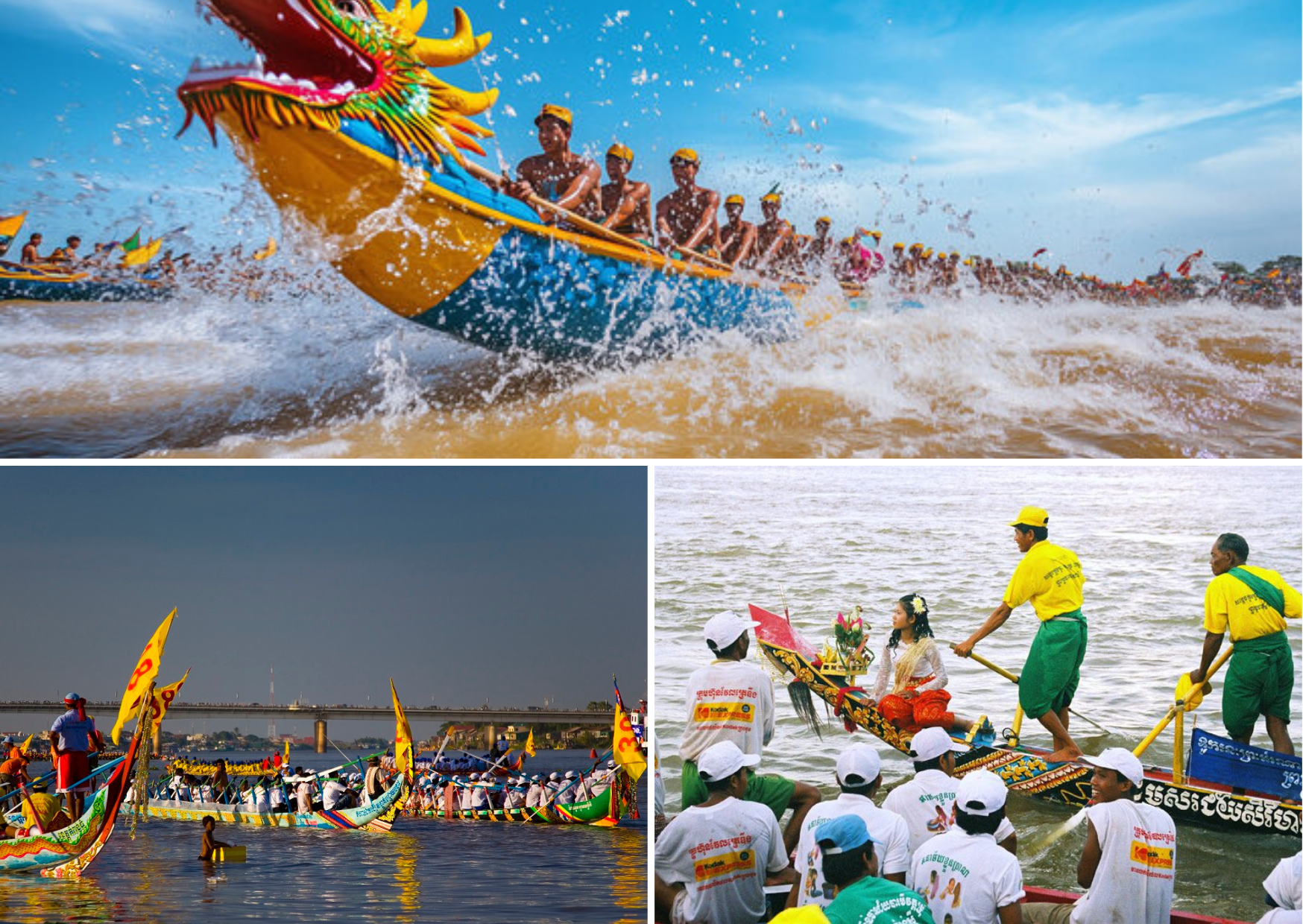
Water Festival (Bon Om Touk)
Pchum Ben is one of Cambodia’s most spiritual festivals. Pchum Ben is a Cambodian religious festival celebrated by Buddhists. It’s one of the longest festivals in Cambodia, lasting for 15 days. Pchum Ben day, which falls on the 15th day of the 10th Khmer month, falls on 24 September this year and marks the start of a 15-day religious festival in Cambodia.
Cambodians believe that the fate of these souls depends on their past karma and on the merit earned through offerings made by their living relatives. By performing religious acts during Pchum Ben, families help their ancestors reduce suffering and improve their spiritual journey.
The festival is a time to remember relatives and community members who have passed away. At the same time, the holiday is one of community-building and mutual respect. It’s a time when everyone can join who wishes to take part. By gathering together to acknowledge death, the community strengthens relationships among the living.
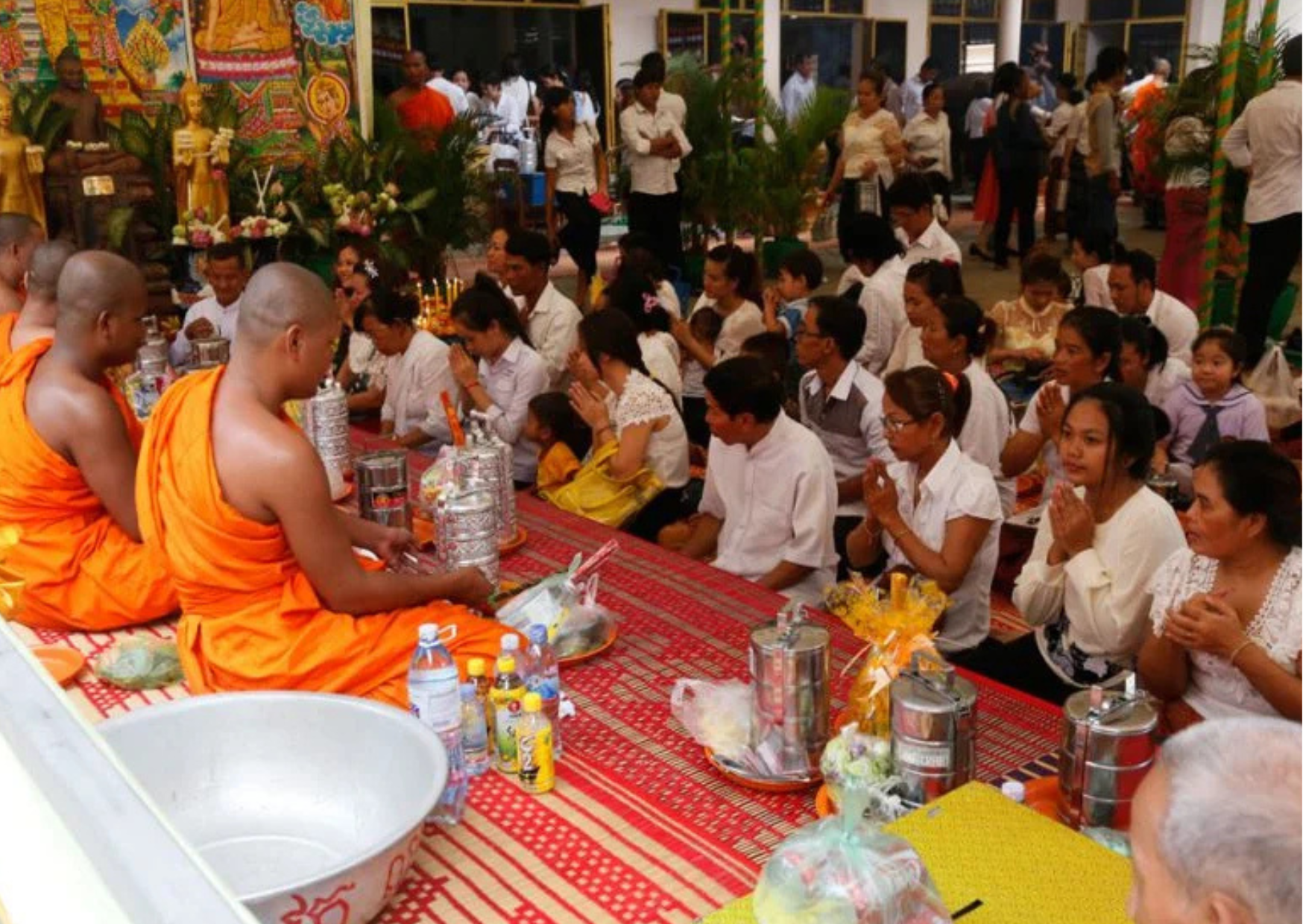
Pchum Ben (Ancestors’ Day)
Visak Bochea Day, also known as Vesak Day or Buddha Day, holds deep spiritual significance for Buddhists worldwide. In Cambodia, Visak Bochea commemorates the birth, enlightenment, and death of Buddha.
Across Cambodia, pagodas and temples come alive stunningly with vibrant festivities during Visak Bochea Day. Devotees gather to offer flowers, incense, and candles to Buddha statues, while monks lead prayers, chants, and insightful sermons. The air is filled with the melodic sounds of traditional music and the graceful movements of cultural dances. It’s an ideal to immerse yourself in a special atmosphere and understand about Cambodian the essence of Buddhism.
In recent years, Visak Bochea Day has gained international recognition, including an observance at the United Nations. This global acknowledgment underscores the importance of interfaith dialogue and understanding. Within Cambodia, communities often organize educational events and discussions that delve into the relevance of Buddhist teachings in contemporary society.
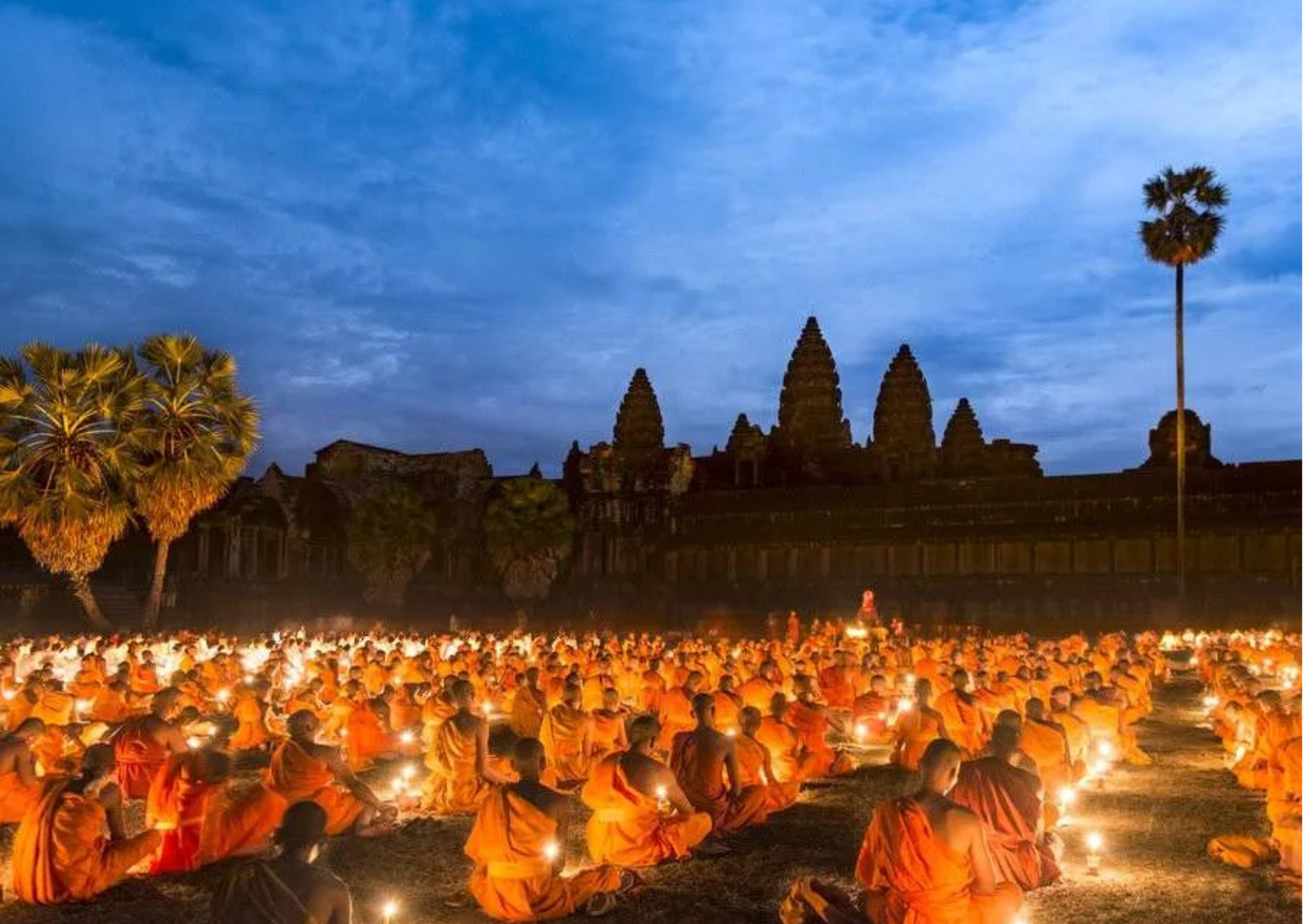
Visak Bochea Day
The Royal Ploughing Ceremony is well-known in Khmer as Bon Chroat Preah Nongkoal, one of Cambodia’s most important traditional agricultural festivals. This ancient royal ritual officially marks the beginning of the rice-growing season, which is the country’s deep historical and cultural connection to farming and rice cultivation.
The ceremony takes place on the fourth day of the waning moon in the sixth lunar month, which usually falls in May according to the Western calendar. Each year, the exact date and location vary, as the schedule is determined by royal astrologers.
During the ceremony, sacred oxen are led onto a ceremonial field and offered a selection of symbolic foods such as rice, corn, beans, sesame seeds, grass, and water. Royal Palace astrologers, who are traditionally Brahmin priests, carefully observe which foods the oxen choose to eat.
Based on these choices, the astrologers predict the success of the upcoming harvest, rainfall patterns, and economic conditions for the year ahead. Although many modern Cambodians view the predictions with skepticism, the ceremony remains highly respected as a cultural tradition.
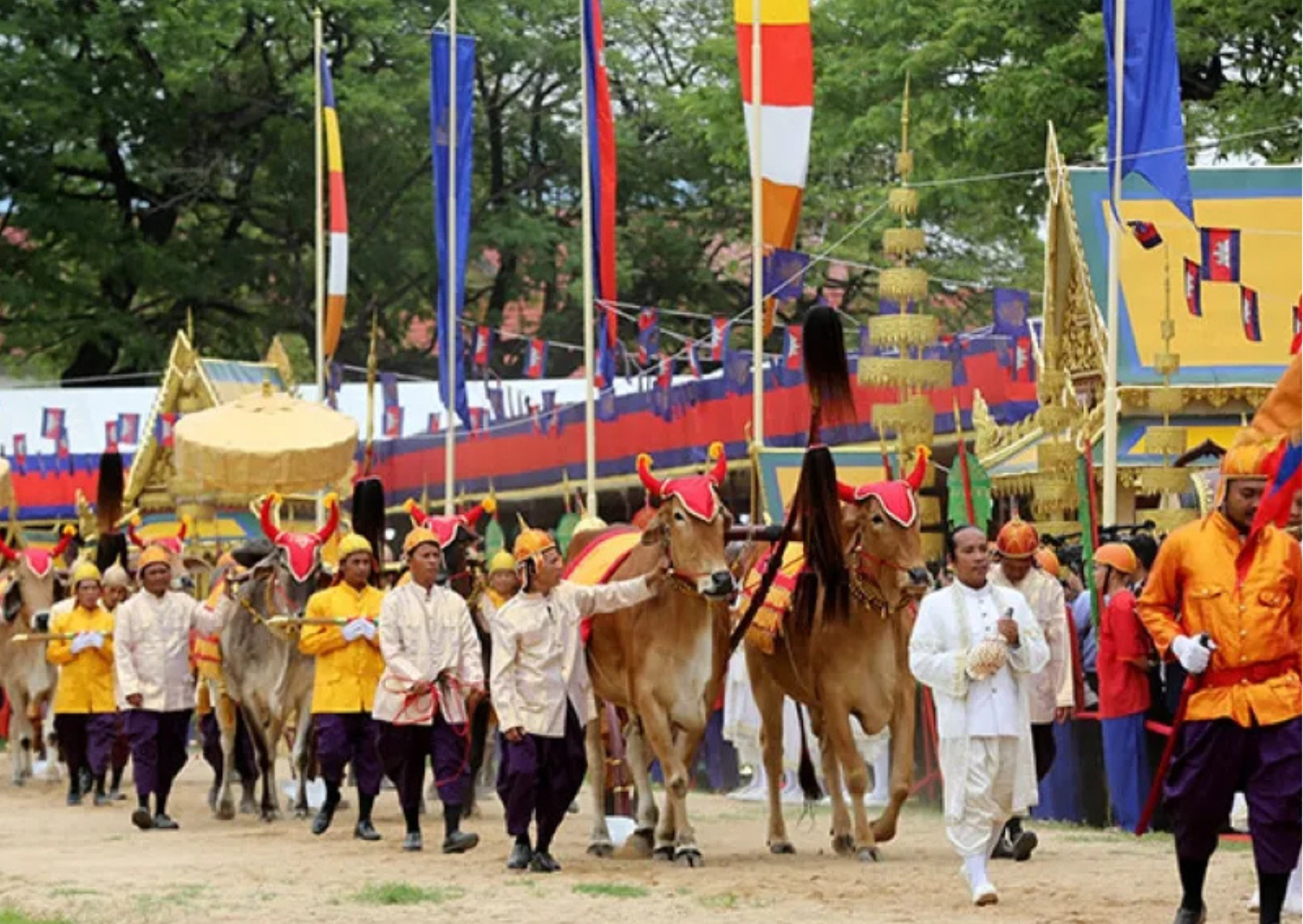
Royal Ploughing Ceremony (Bon Chroat Preah Nongkoal)
Meak Bochea honors a significant gathering of Buddha’s disciples. Meak Bochea, also known as Māgha Pūjā in other Buddhist countries, is a profoundly significant Buddhist festival celebrated primarily in Southeast Asian nations like Cambodia, Thailand, Laos, and Sri Lanka. It is observed on the full moon in the third month of the Khmer calendar, which generally lands it in late February or early March.
In Buddhism, a full moon day is considered a holy day and is considered the perfect time to repent of sins and “make merits.” The added historical significance of the full moon on Meak Bochea Day turns it into a day of penitence, of doing good deeds for merits, and of remembering the teachings of Buddha. And, many attend local temples and pagodas on this day to perform merit-making acts. They also strive to purify their minds, avoid all sins, and to adhere to all of the Buddha’s commands. Those commands include avoidance of drinking alcoholic beverages, killing, stealing, and lying. Many who have broken these precepts will seek forgiveness on Meak Bochea Day.
When you visit Cambodia on Meak Bochea Day, you may wish to take part in seeing a Buddhist temple ceremony. There will be processions in which candles, incense sticks, and lotus flowers are carried around the temple three times. You can view the decorated temples and watch the worshipers. While in Cambodia, you should not miss the Cambodian Cultural Village, a theme park in Siem Reap. You can find miniature replicas of many of Cambodia’s historically important buildings. You will have a chance to be exposed to the cultures of 19 local ethnic groups and be able to tour 11 cultural villages.
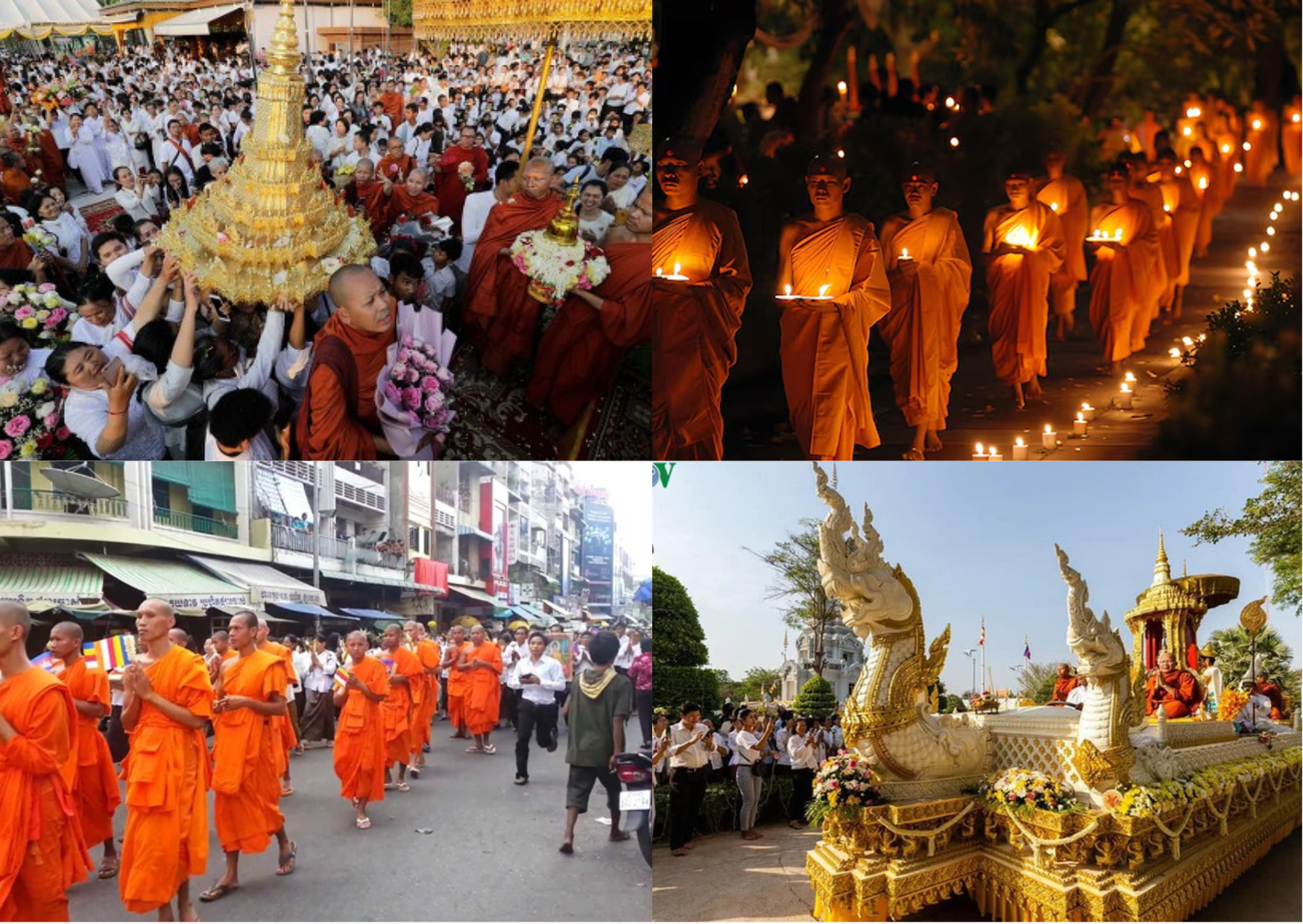
Meak Bochea Day in Cambodia
Angkor Sankranta is a large-scale Khmer New Year celebration held near Angkor temples. The event includes traditional performances, games, art exhibitions, and food stalls, making it one of the best festivals for tourists.
It always organise during Khmer New Year , in April in Siem Reap – Angkor Archaeological Park. Set against the breathtaking backdrop of Angkor’s temples, this festival transforms the archaeological park into a living cultural stage.
Visiting Sieam Reap at this time, visitors can immerse themselves in a dazzling showcase of Khmer music, traditional dance, and folk games, enjoy delicious food fairs, and witness Apsara performances that bring centuries-old art to life before the temple walls. More than a festival, Angkor Sankranta is a mix with reunion of tradition and modern celebration, uniting locals and travelers in shared appreciation of Cambodia’s heritage and artistry.
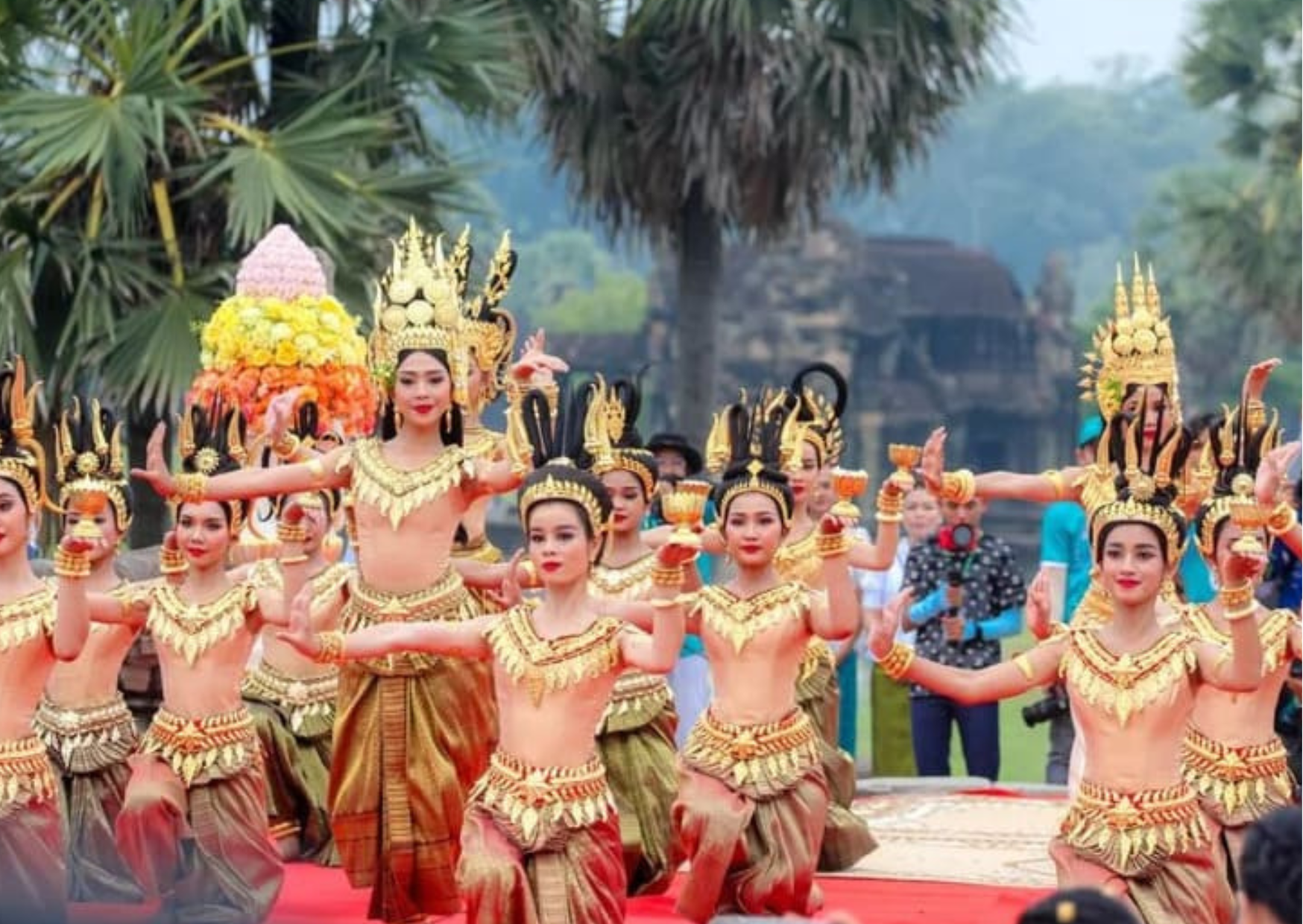
Angkor Sankranta (Siem Reap)
Cambodia’s National Independence Day commemorates the historic moment when the country regained full sovereignty from French colonial rule on November 9, 1953. This national holiday represents a turning point in Cambodia’s history and symbolizes the nation’s hard-fought journey toward freedom and self-determination.
Each year, Cambodians across the country honor this important milestone with official ceremonies, patriotic events, and cultural celebrations. The day recognizes not only political independence but also the resilience and unity of the Cambodian people as the nation moved toward modern development.
National Independence Day remains a powerful reminder of Cambodia’s national pride, historical identity, and enduring commitment to sovereignty, making it one of the most significant public holidays in the country.
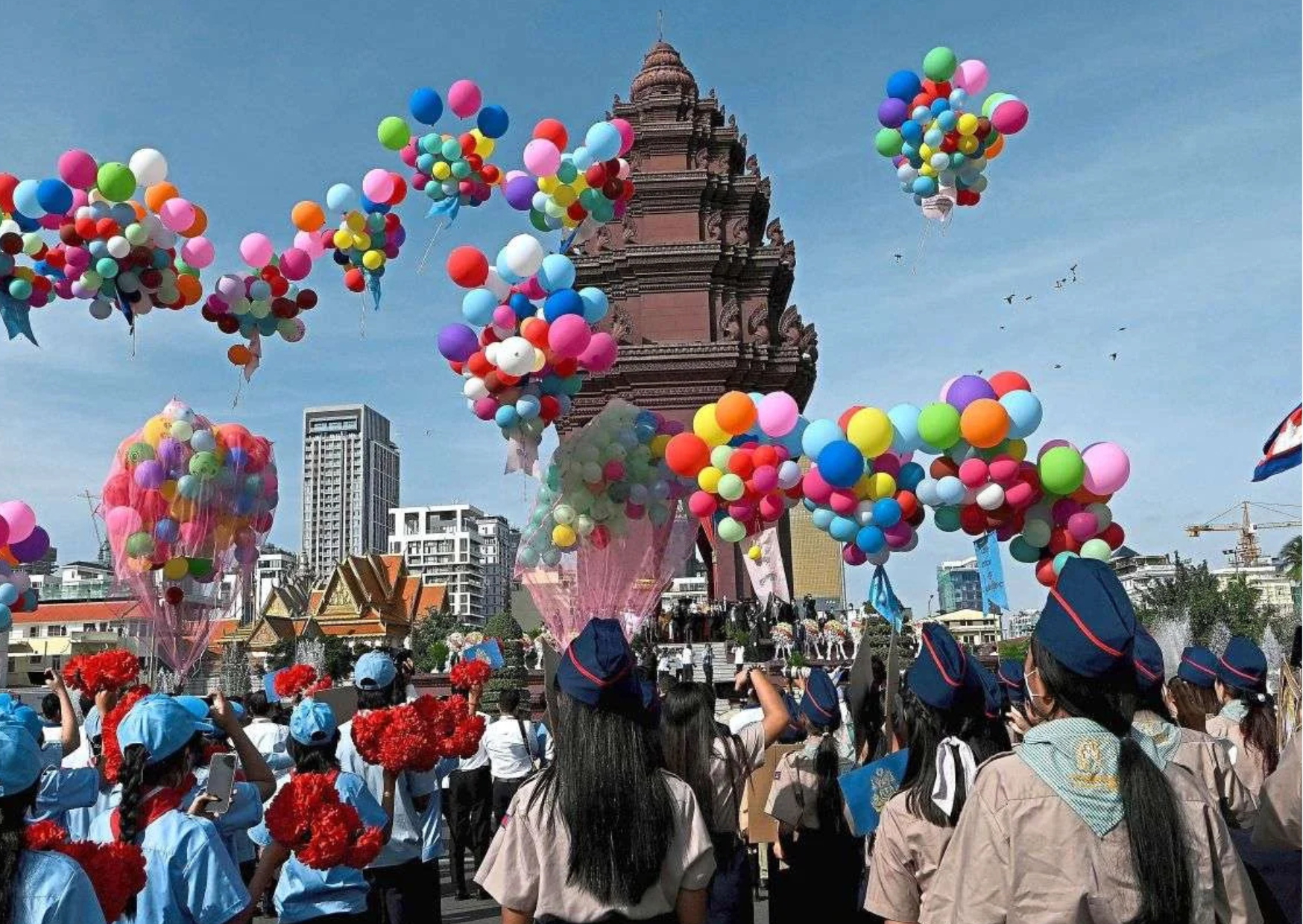
Independence Day in Cambodia
Chinese New Year, also known as the Spring Festival, is widely celebrated in Cambodia, especially among the large Chinese-Cambodian community. Although it is not an official public holiday, the festival plays an important cultural and economic role in Cambodian society.
The celebration usually takes place between late January and mid-February, depending on the lunar calendar. During this time, many businesses temporarily close, families gather for reunion meals, and neighborhoods- particularly in Phnom Penh, Battambang, and Sihanoukville-come alive with red lanterns, fireworks, and traditional decorations.
Chinese New Year in Cambodia is a time for family reunions, ancestor worship, and good fortune rituals. Families clean their homes to sweep away bad luck, prepare offerings for ancestors, and exchange red envelopes (ang pao) filled with money as symbols of prosperity and happiness.
Visitors traveling during this period can enjoy:
Chinese New Year adds a vibrant cultural layer to Cambodia’s festival calendar and offers travelers a unique opportunity to experience the country’s multicultural traditions.
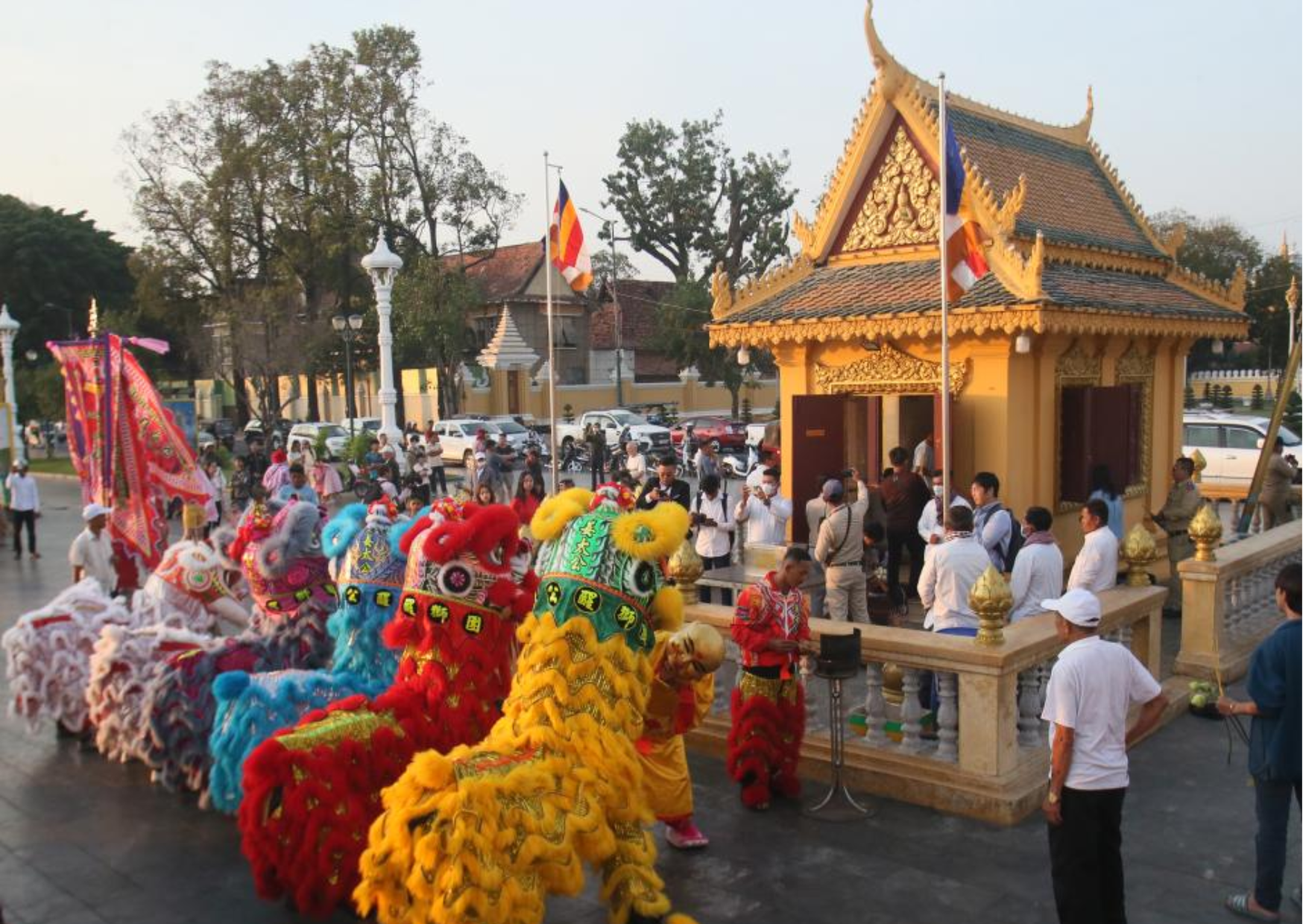
Chinese New Year (Spring Festival) in Cambodia
The most important festivals in Cambodia include Khmer New Year (Chaul Chnam Thmey), Pchum Ben, Water Festival (Bon Om Touk), Royal Ploughing Ceremony, and Independence Day.
The best time to visit Cambodia for festivals is between April and November, when major celebrations such as Khmer New Year, Water Festival, and Pchum Ben take place.
Yes. Cambodian festivals are welcoming, family-friendly, and culturally rich. Tourists are encouraged to observe traditions respectfully and can often participate in public celebrations.
During major festivals like Khmer New Year and Pchum Ben, many businesses, banks, and government offices close or operate on reduced hours.
Visitors should wear modest and respectful clothing, especially when visiting temples. Light, breathable clothing is recommended due to Cambodia’s warm climate.
Many Cambodian festivals follow the Buddhist lunar calendar, so dates change each year. Travelers should check festival dates in advance when planning their trip.
Festivals in Cambodia reflect the heart and soul of the nation where spirituality, tradition, and community remain deeply connected. Each celebration, from Khmer New Year and Angkor Sankranta to Pchum Ben and Independence Day, tells a story of resilience, gratitude, and cultural pride. For travelers, attending these festivals offers more than entertainment; it provides a rare opportunity to connect with local life, witness living traditions, and gain meaningful insight into Cambodian culture. By planning your visit around these festivals, you can experience Cambodia at its most colorful, welcoming, and authentic.
Contact Asia Viva Travel to create unforgettable tours in Cambodia or combined Cambodia itineraries, ensuring your journey is smooth, enriching, and completely worry-free.
 18/12/2025
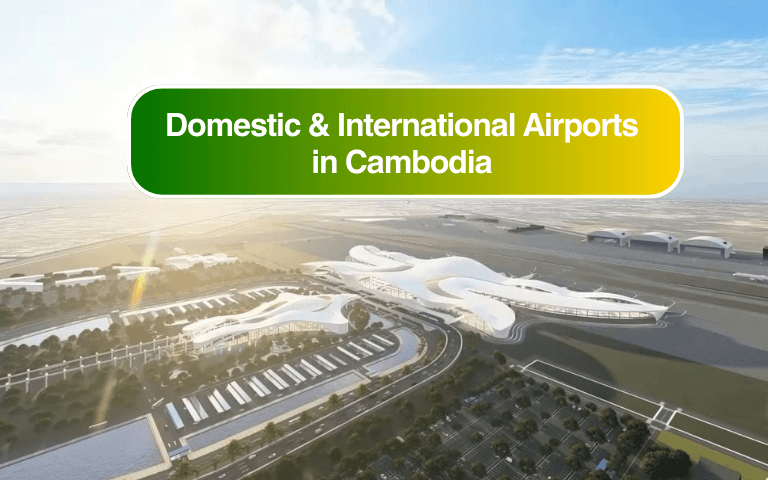
Discover Cambodia’s airport guide to choose the best airport for Angkor Wat, Phnom Penh, Siem Reap or the beaches, and plan a smooth, efficient journey.
 26/11/2025
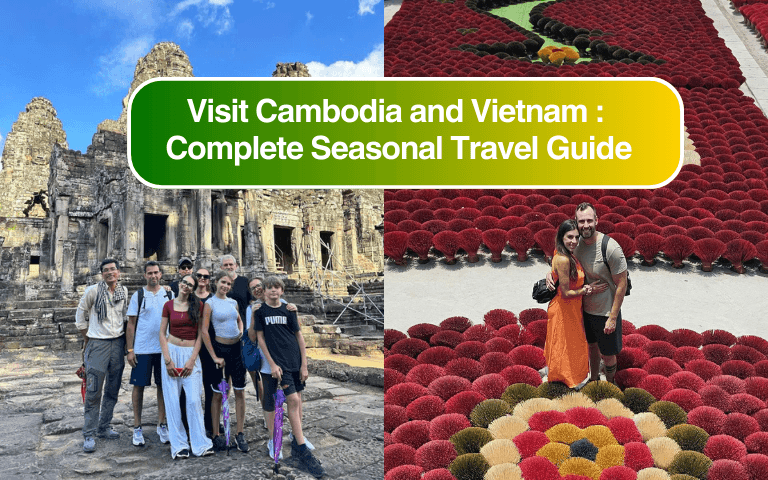
Visiting Cambodia and Vietnam for stunning landscapes, vibrant cities, ancient temples, and UNESCO World Heritage sites is a complete travel experience for tourists.
 19/11/2025
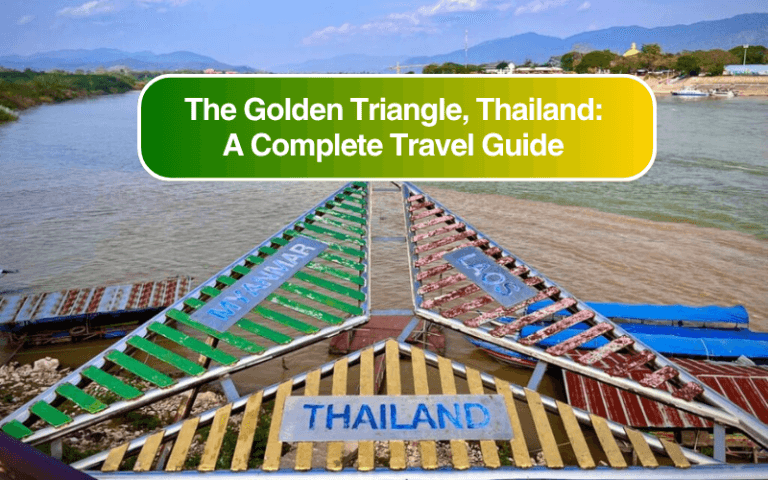
The Golden Triangle is one of the most legendary travel destinations in Southeast Asia, known for its history, stunning river landscapes, and multicultural influence
 30/07/2025
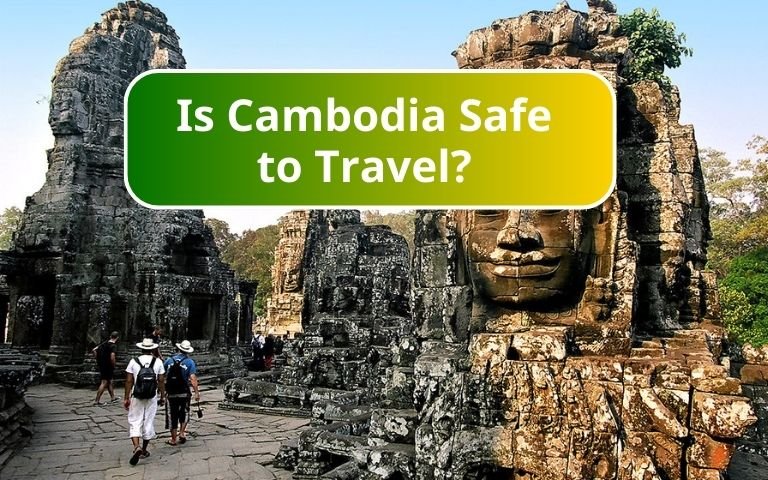
Is Cambodia safe to travel? Yes, Cambodia is a safe and welcoming destination for all tourists. With its vibrant culture, breathtaking natural landscapes, exploring this country is enjoyable and rewarding.